Target
Membrane disruption
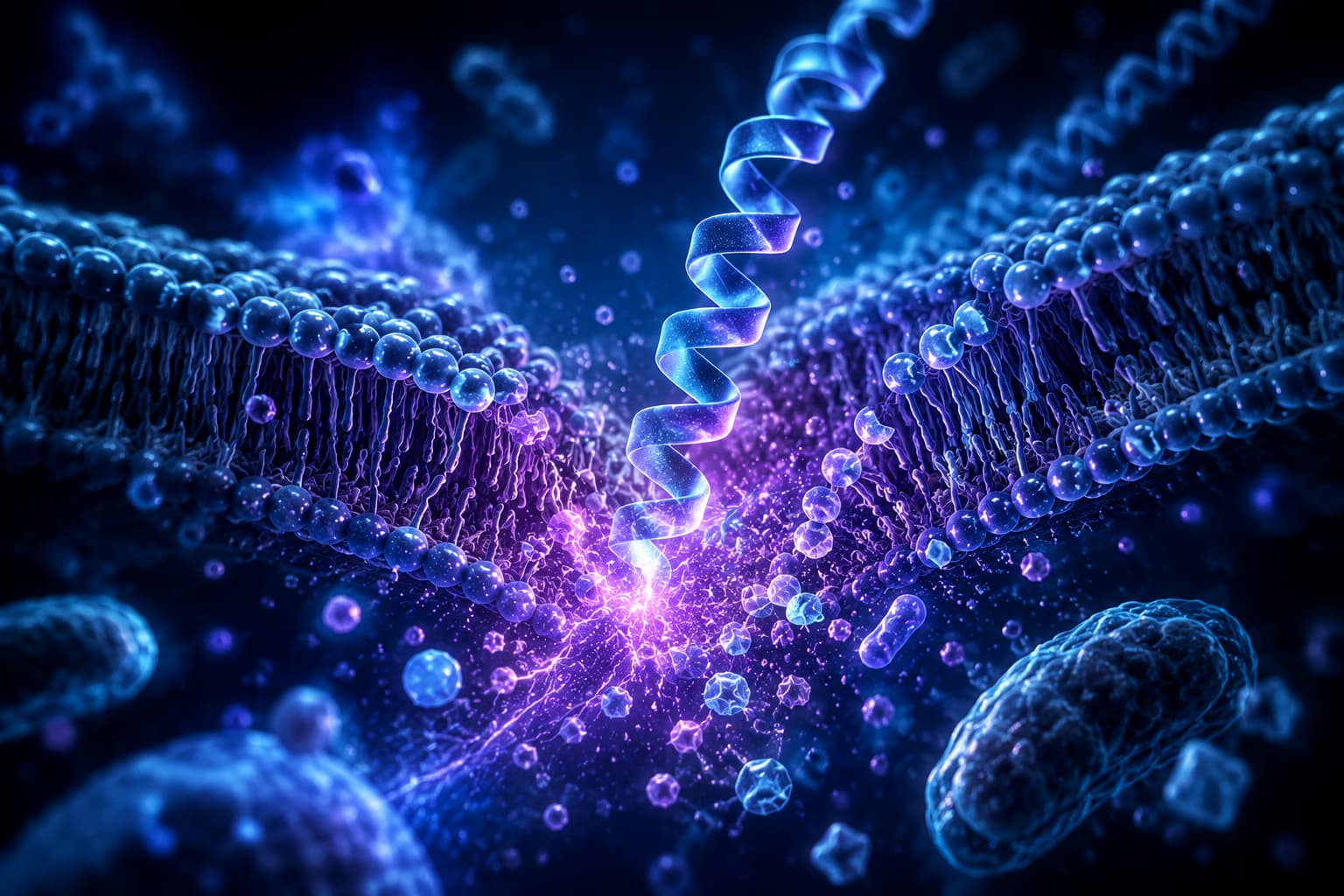
Physical membrane disruption (Electrostatic/Hydrophobic).
Antimicrobial Peptides
Nature has spent millions of years perfecting its defense mechanisms. Antimicrobial peptides harness this evolutionary advantage to deliver innovative solutions against bacteria, fungi, and other pathogens.
The Peptide Shift
At the 17th American Peptide Symposium in San Diego in 2001, Albert Loffet asked a question that captured the uncertainty of the era: is there truly a market for peptides as drugs?
At the time, the scepticism made sense. Peptides were a niche pharmaceutical category, valued at only a small fraction of the global pharmaceutical industry. Today, that doubt has collapsed.
What was once treated as a pharmaceutical afterthought has become a central language of modern medicine, metabolic health, oncology and biological design.
The rise of household names such as Ozempic, Wegovy and Mounjaro pushed peptides into global awareness. But the deeper revolution is happening beyond consumer headlines: in antimicrobial resistance, synthetic biology and AI-guided molecular engineering.
Why AMPs matter
AMPs are natural components of the innate immune systems of microorganisms, plants and animals. Many act by rapidly disrupting microbial membranes rather than targeting a single biochemical pathway.
This physical mode of action matters. For a pathogen to resist it, it often needs to alter the architecture of its own membrane — a far more difficult evolutionary step than bypassing a conventional drug target.
AMPs can be naturally occurring, semi-synthetic or fully engineered. The most advanced frontier is now the deliberate design of peptide properties such as charge, amphipathicity, stability, selectivity and secondary structure.
The AI turn
Artificial intelligence has changed how antimicrobial peptides are discovered and engineered. Instead of testing only what nature provides, researchers can explore vast sequence spaces, predict biological activity and generate new candidates with improved potency, stability and selectivity.
This compresses the distance between biological insight and real-world application. Peptide science, synthetic biology and computational design are converging into a new class of intelligent antimicrobial systems.
What began as the study of natural defence molecules is becoming a practical platform for agriculture, aquaculture, animal health, preservation, biosecurity and future human therapeutics.
At the 17th American Peptide Symposium in San Diego in 2001, Albert Loffet famously posed a fundamental question: "Is there truly a market for peptides as drugs?" At the time, the scepticism was understandable.
Today, AMR is widely recognised as one of the greatest challenges facing modern medicine and food production. As conventional antibiotics lose effectiveness, there is an urgent need for new antimicrobial strategies that are both sustainable and less prone to resistance.
Antimicrobial peptides are a natural component of the innate immune system of microorganisms, plants and animals. Many acts by rapidly disrupting microbial membranes, a mechanism that makes the development of resistance considerably more difficult than with traditional antibiotics.
Recent advances in artificial intelligence and computational biology have fundamentally changed the way new antimicrobial peptides are discovered and engineered. AI can now rapidly explore vast sequence spaces, predict biological activity and design novel peptides with enhanced potency, stability and selectivity. This has dramatically accelerated the pace of peptide innovation and opened opportunities that were previously impractical.
Physical membrane disruption (Electrostatic/Hydrophobic).
Rapid (Bactericidal within minutes).
Low (Requires restructuring entire membrane).
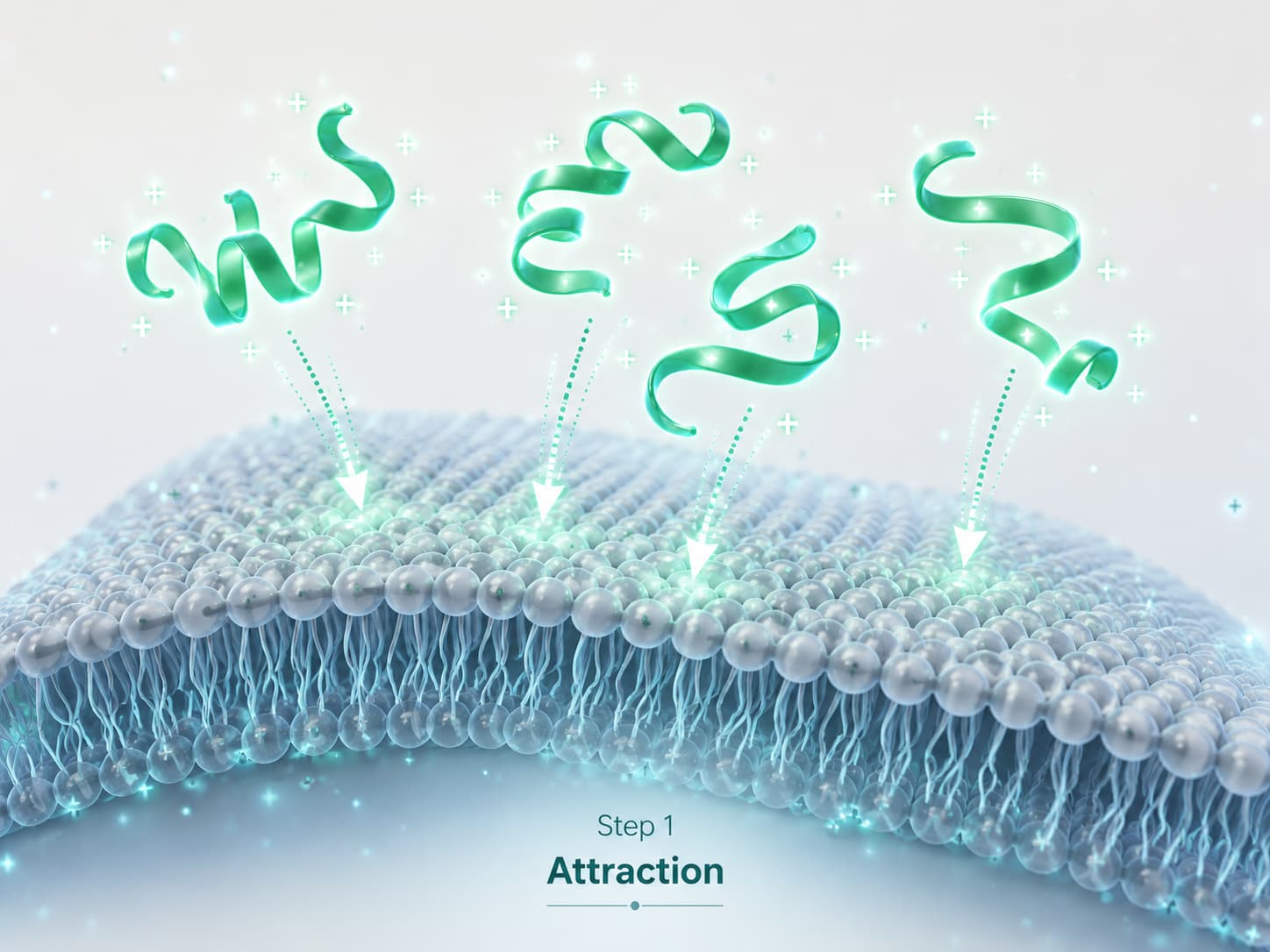
Step 1
Attraction

Step 2
Attachment & Burrowing
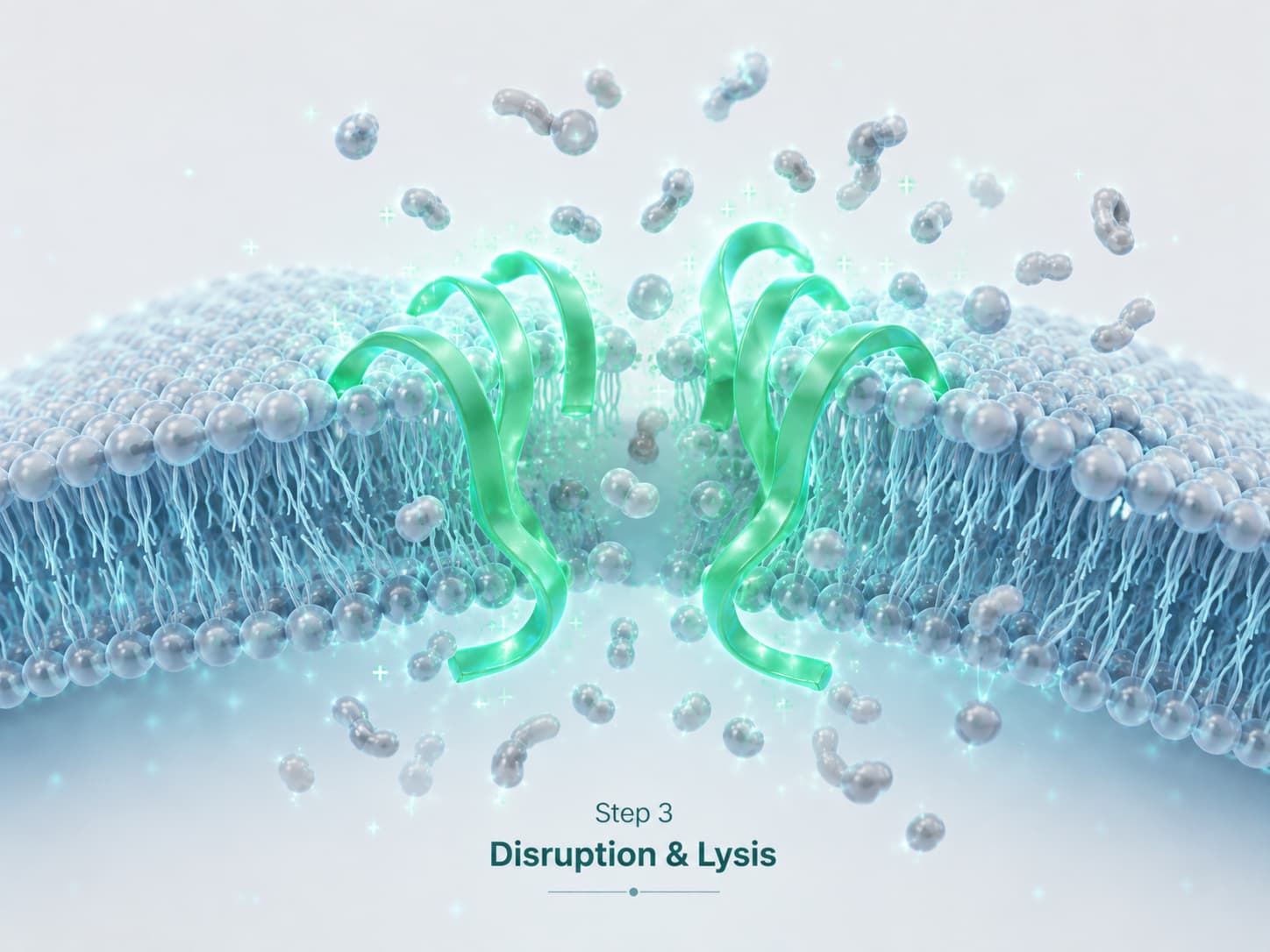
Step 3
Disruption & Lysis
The Crisis
Antimicrobial resistance is no longer a distant scientific warning. It is a global systems failure spreading across human health, animal production, agriculture and industrial supply chains.
The overuse of antibiotics in the food chain accelerates the evolution of resistant pathogens before they ever reach hospitals, while toxic chemicals continue to leave residues in soil, crops, water systems and consumer products.
PhytoCyte was built to confront this crisis with AI-supported antimicrobial peptide technology: precise, biodegradable biological systems designed to replace antibiotics and harsh chemical interventions.
10M
Potential annual deaths linked to antimicrobial resistance by 2050 if effective alternatives are not deployed at scale.
70%
Of global antibiotic use occurs in animals rather than humans, creating evolutionary pressure across the food chain.
Where PhytoCyte intervenes
Aquaculture
Antibiotic use in fish and shrimp farming creates residue risks, export restrictions and fragile stock survival. AQUAI targets aquatic pathogens such as Ichthyophthirius multifiliis, Vibrio and Streptococcus through recombinant AMP systems designed for feed-integrated protection.
Livestock Health
Broad-spectrum antibiotics remain deeply embedded in livestock production. VETAI addresses post-weaning diarrhoea in swine, mastitis and respiratory infections in cattle, poultry gut disease, Salmonella pressure and early chick mortality linked to E. coli.
Agriculture
Chemical pesticides leave residues on crops and in soil. AGRAI introduces biodegradable AMP-based biopesticides and bio-stimulants targeting fungal and parasitic threats including azole-resistant Aspergillus, Candida, Eimeria and Histomonas.
Industrial Sterilisation
Biofilms survive where conventional cleaning fails. DISAI develops protein-based enzymatic cleaners capable of breaking down persistent bacterial biofilms on processing equipment and high-risk facility surfaces.
Bio-Preservation
Food, beverage and cosmetic brands are under pressure to move beyond controversial preservatives. PRESAI explores clean-label biological preservation systems targeting spoilage bacteria, moulds and fungi without parabens or benzoates.
Human Therapeutics
The long-term ambition is clinical. HUMAI focuses on future AMP-based therapies for antimicrobial resistance, chronic wound infections and cases where traditional antibiotics are no longer enough.
By engineering antimicrobial peptides for aquaculture, livestock, agriculture, industrial sanitation, preservation and future human therapeutics, PhytoCyte offers a natural, biodegradable and scalable alternative to the antibiotic and chemical dependency that defines today’s production systems.
AMP vs Antibiotics
Antimicrobial resistance is increasing pressure on livestock, aquaculture and food systems. AMPs offer a different biological approach by targeting microbial membranes while also supporting immune-related responses.
Repeated antimicrobial use creates selection pressure, allowing resistant organisms to persist and spread.
Conventional Antibiotics
Antibiotics often act through defined molecular targets. This can be highly effective, but microbes may adapt by modifying the target, pumping the drug out or inactivating it.
Antimicrobial Peptides
AMPs often interact with microbial membranes and cell walls. This gives them a different mode of action and makes classical resistance harder to develop.
Conventional antibiotics usually target specific intracellular processes such as cell wall, protein or DNA synthesis.
AMPs often interact directly with microbial membranes and cell walls through electrostatic and hydrophobic interactions.
Resistance can develop through target modification, efflux pumps, enzymatic inactivation and gene transfer.
AMPs generally have a lower risk of classical resistance because they target fundamental membrane structures.
Many antibiotics act more slowly and may require hours or days to show full therapeutic effect.
Many AMPs act rapidly and can kill microbes within minutes of exposure.
Antibiotics may be narrow or broad spectrum depending on the compound.
AMPs can show broad activity against bacteria, fungi, viruses and parasites.
Their long-term effectiveness is limited by growing antimicrobial resistance.
AMPs still face challenges such as stability, production cost and delivery.
Key takeaway: AMPs are not simply “another antibiotic”. Their value is in a different mechanism, broad biological activity and potential use in systems where reducing antibiotic dependence is a priority.